Sacred Ground, Rising Costs: What Happens When a Church Can No Longer Afford Its Own Neighborhood
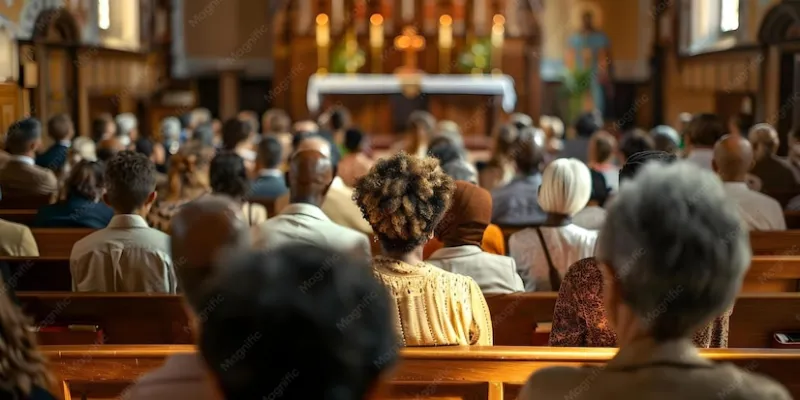
There is a particular kind of grief that settles over a congregation when it realizes the community it was built to serve has been priced out of existence. The pews may still fill on Sunday mornings, but the faces are different now — younger, whiter, more affluent — and the longtime members who once walked to worship now drive in from distant zip codes, if they come at all. This is not a hypothetical scenario. It is the lived reality of hundreds of urban congregations across the United States, and it demands a reckoning that is simultaneously financial, theological, and moral.
Gentrification, long studied as a housing and urban planning phenomenon, has arrived at the doorstep of the American church. And the church, for all its theological resources, has been slow to name what it is witnessing.
The Property Paradox
Many historic urban congregations sit on land that has appreciated dramatically over the past two decades. A church that purchased its building in a low-income neighborhood in the 1970s may now own property worth millions of dollars — an asset that, on paper, represents extraordinary wealth, but in practice creates an almost impossible tension. Sell the building and the congregation gains financial security while surrendering its presence in the community. Stay, and rising property taxes, deferred maintenance costs, and declining legacy membership can slowly drain resources until closure becomes inevitable anyway.
Consider the situation faced by a Baptist congregation in Chicago's Pilsen neighborhood, where a historic Mexican-American church community has watched its surrounding blocks transform over the past decade. The congregation's founding families — many of whom immigrated from Mexico and built the church from nearly nothing in the 1980s — have been pushed to suburban communities in Cicero and Berwyn as rents have climbed. The church building remains. The community it served does not.
Similar stories are unfolding in Atlanta's Old Fourth Ward, in Brooklyn's Bed-Stuy, in Oakland's Fruitvale district, and in dozens of other urban neighborhoods where faith communities once served as anchors of low-income life. The buildings endure while the congregants disperse.
When New Arrivals Fill the Offering Plate
The financial dynamics of gentrification create a temptation that few church leaders will openly acknowledge but many quietly understand. New, wealthier residents moving into changing neighborhoods often bring with them a hunger for community, a certain aesthetic appreciation for historic architecture, and disposable income that can stabilize a struggling church budget almost overnight.
The danger is not that these newcomers are unwelcome — the Christian tradition is clear that all people are made in the image of God and deserving of belonging. The danger is what happens to a congregation's identity and mission when its financial survival becomes dependent on serving a demographic that is, in many respects, the beneficiary of the same economic forces that displaced the founding community.
A Methodist pastor in Washington, D.C.'s Shaw neighborhood described the experience this way: "We went from a church that was poor alongside poor people to a church that was comfortable alongside comfortable people. We didn't plan it. We didn't vote on it. It just happened, one visitor card at a time."
This gradual drift — what some urban theologians have begun calling "mission creep by market forces" — rarely announces itself. It accumulates quietly through small decisions: the new sound system funded by a tech professional's pledge, the redesigned website that appeals to young urban professionals, the sermon series on work-life balance that resonates more with the new arrivals than with the legacy members still commuting from distant neighborhoods.
Theological Frameworks for a Hard Question
Scripture does not offer a zoning ordinance, but it offers something more demanding: a consistent preferential concern for the poor, the displaced, and the marginalized. The prophets of the Hebrew Bible reserved their sharpest condemnations not for individual sinners but for economic systems that consumed the homes and livelihoods of vulnerable people. Isaiah, Amos, and Micah each spoke directly to the sin of those who "add house to house and join field to field" — a biblical description of accumulation that sounds remarkably contemporary.
The New Testament church, particularly as described in the Acts of the Apostles, was explicitly organized around economic solidarity. The early Christians sold property and distributed resources according to need. They did not protect their assets; they deployed them.
This tradition calls contemporary urban congregations to ask a harder question than "Can we afford to stay?" It asks: "Who are we staying for?"
Congregations Choosing a Different Path
Some churches are finding creative answers. In Los Angeles, a Presbyterian congregation facing intense development pressure on its South Central property entered into a community land trust arrangement with a neighborhood housing organization, permanently removing the land from speculative markets while maintaining the congregation's presence. The church gave up the possibility of a profitable sale; in return, it secured its mission and its community's trust.
In Philadelphia, a historically Black congregation in the rapidly gentrifying Fishtown neighborhood has converted underutilized portions of its campus into permanently affordable housing units, partnering with a community development corporation to ensure that longtime residents have somewhere to return. The church did not merely remain in the neighborhood — it actively worked to reconstitute the community that gentrification had scattered.
These examples are not without their complications. Land trust agreements constrain future options. Affordable housing development requires expertise and capital that most congregations do not possess. The path is genuinely difficult.
But difficulty is not the same as impossibility, and the Christian tradition has never promised that fidelity to mission would be financially convenient.
The Question Every Urban Congregation Must Answer
There is no universal answer to the pressures that gentrification places on urban churches. Some congregations will legitimately determine that relocating to follow their displaced membership is the most faithful response. Others will choose to remain and serve whoever lives in the neighborhood, accepting that their demographic will change. Still others will fight, with every legal and spiritual tool available, to preserve both their physical presence and their original community.
What is not acceptable — not theologically, and not in good conscience — is to allow the market to make this decision by default, to drift quietly into serving the affluent while telling ourselves the story of a church for the poor.
The neighborhoods are changing. The question is whether the church will be a witness to justice within that change, or simply another institution that was swept along by it.