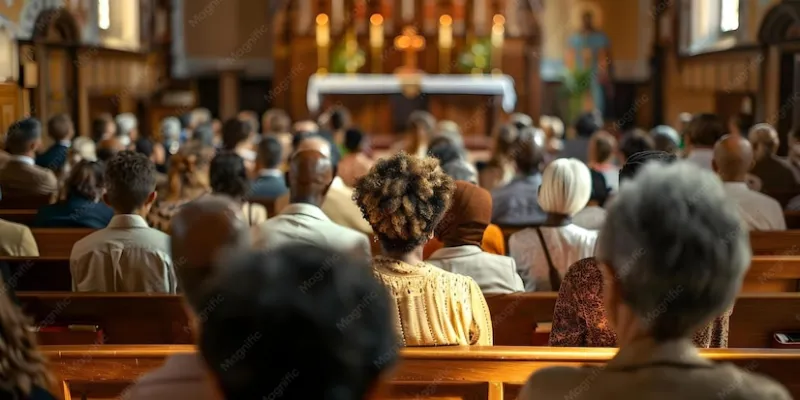
Prophetic Voices from the Pulpit: How City Pastors Are Answering the Call to Speak Truth to Power
On a Sunday morning in a majority-Black congregation on Chicago's South Side, the pastor did not open with a hymn. He opened with a map. Projected behind the pulpit was a color-coded rendering of eviction filings across the city's zip codes—a visual sermon before a word had been spoken. By the time he reached his text, the congregation already understood: the Gospel he intended to preach that morning would not be confined to the afterlife.
This scene, increasingly common in urban churches from Atlanta to Seattle, signals a broader shift in how metropolitan faith leaders understand the purpose of the pulpit. For many, preaching has never been merely doctrinal instruction. It has always been, at its most faithful, a form of public witness. But the questions of how to speak, when to speak, and what consequences to accept are ones that city pastors are navigating with fresh urgency.
The Biblical Case for Prophetic Preaching
The theological foundation for what scholars often call "prophetic preaching" is neither new nor peripheral. It runs through the Hebrew prophets—Amos condemning the exploitation of the poor, Isaiah indicting corrupt leaders, Micah demanding justice in the city gates—and into the New Testament, where Jesus's inaugural sermon in Luke 4 explicitly names the liberation of the oppressed as central to his mission.
Rev. Dr. Anita Chambers, senior pastor of a multiracial congregation in Washington, D.C., draws directly from this tradition. "When I preach on housing," she explains, "I am not departing from Scripture. I am reading Scripture in its proper context. The prophets were not addressing abstract sin—they were naming specific injustices perpetrated by specific powers. That is the model."
This framework, rooted in what theologians call the "prophetic imagination," insists that the church's role is not simply to comfort individuals but to challenge the social arrangements that produce suffering. For urban pastors, who often watch their congregants navigate unaffordable rent, discriminatory policing, and inadequate schools within the same week they gather for worship, the distance between spiritual life and civic reality can feel impossibly thin.
The Tensions That Follow
Speaking out, however, does not come without friction. Congregations are rarely monolithic, and urban churches—with their diverse socioeconomic compositions and wide range of political sympathies—can become sites of real conflict when a pastor takes a public stance.
Rev. Marcus Okafor, who leads a Baptist church in Philadelphia, recalls the backlash he received after delivering a series of sermons on police accountability following a high-profile officer-involved shooting in his neighborhood. "I lost members. People who had been with us for years felt I had turned the church into something political. That hurt deeply." He pauses. "But I also had young men in that congregation whose lives were being shaped by fear. I could not remain silent and call myself their pastor."
The tension Okafor describes is not unique to him. It reflects a broader ecclesiological question: Is the pastor's primary obligation to congregational unity, or to prophetic fidelity? Most clergy who engage in public advocacy do not see these as mutually exclusive—but they acknowledge that managing both requires considerable pastoral wisdom.
Some have found that grounding contentious messages in shared theological language helps. Rather than framing a sermon on economic inequality as a political argument, they anchor it in the church's historic teaching on human dignity, the image of God in every person, and the Scriptural imperative to protect the vulnerable. The political implication follows from the theological premise, rather than leading it.
Navigating the Johnson Amendment and Legal Boundaries
For many urban churches, the question of speech is further complicated by legal constraints. The Johnson Amendment, a provision of federal tax law, prohibits 501(c)(3) organizations—including most churches—from directly endorsing or opposing political candidates. While the law has been the subject of ongoing political debate, it remains in force, and many pastors are careful to distinguish between issue-based advocacy and partisan electioneering.
"There is a clear difference between preaching that affordable housing is a Gospel issue and telling my congregation to vote for a particular candidate," says Rev. Chambers. "The first is my calling. The second is not my role."
This distinction allows clergy to engage robustly with policy questions—housing vouchers, minimum wage legislation, criminal justice reform—without crossing into prohibited territory. Urban ministry organizations have increasingly offered legal guidance and training to help pastors understand where those lines fall.
Building Congregational Capacity for Difficult Conversations
Perhaps the most durable lesson emerging from these congregations is that prophetic preaching is most effective when it is embedded in a broader culture of formation. Pastors who have sustained public witness without fracturing their congregations tend to invest heavily in small-group study, community listening sessions, and regular theological education that prepares their members to engage complexity.
Rev. Okafor now runs a monthly forum he calls "Faith and the City," in which congregation members gather to discuss local news through a biblical lens. "We read the newspaper and we read the Bible together," he says. "By the time I preach on something difficult, it is not a surprise. We have already been wrestling with it."
This approach treats the congregation not as a passive audience for the pastor's convictions but as an active community of discernment. Members who feel included in the process of theological reflection are, in practice, more likely to remain engaged even when they disagree.
The Pulpit as a Site of Accountability
Ultimately, what distinguishes the urban pastors leading this movement is their understanding of the pulpit not as a platform for personal opinion, but as a site of communal accountability—accountability to Scripture, to their neighbors, and to the God who, in the words of the prophet Amos, let justice roll down like waters.
In cities where the consequences of policy decisions are written on the bodies and bank accounts of the faithful, silence is itself a theological position. The pastors who are choosing to speak are not abandoning their spiritual authority. They are, by their own reckoning, finally exercising it fully.
For metropolitan congregations wrestling with these questions, the invitation is not to replicate any single model, but to ask honestly: What does faithfulness require of us in this city, in this moment? The answer, these pastors suggest, will rarely be quiet.