The Next Generation of Urban Prophets: How Young Christians Are Reshaping What Justice Ministry Looks Like
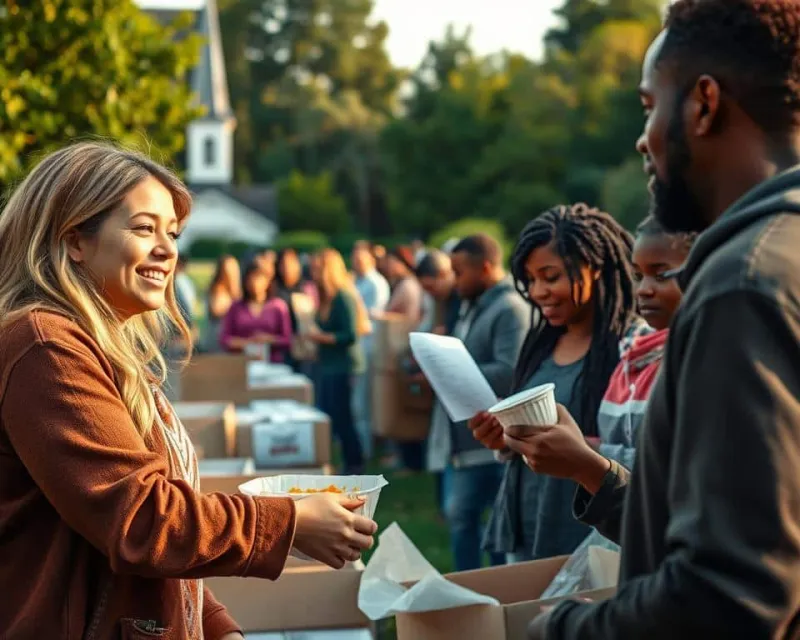
Photo: young diverse Christians urban social justice activism community organizing, via www.jrsbible.info
A Different Kind of Sunday Morning
On a Saturday last spring, a group of about thirty young adults gathered in the fellowship hall of a Baptist church in Atlanta's West End neighborhood. They were there not for a worship service or a Bible study in the traditional sense, but for what the organizing team called a "discernment circle" — a structured conversation weaving together passages from Amos and Revelation with a data presentation on local immigration enforcement patterns and a debrief from two members who had spent the previous week accompanying asylum-seeking families through court proceedings.
The median age in the room was probably twenty-four. The energy was focused, sometimes sharp, occasionally prayerful. By the end of the afternoon, the group had drafted a public letter to the city's police department, planned a multilingual worship service with an immigrant congregation across town, and scheduled a training session on digital security for undocumented community members.
This is what justice ministry looks like when Gen Z is in the room.
A Generation Shaped by Overlapping Crises
To understand what younger Christians are bringing to urban ministry, it helps to understand what they have grown up inside. The generation now in their late teens and mid-twenties came of age during the 2008 financial crisis, witnessed the movement for Black lives reshape national consciousness, lived through a global pandemic that exposed with brutal clarity how race and class determine who survives, and have spent their entire conscious lives absorbing scientific consensus on climate change while watching political institutions fail to act.
These are not abstract concerns for them. They are the texture of daily life. And for those who have remained in — or returned to — Christian faith, the question has never been whether the church should engage these realities. The question is whether the church has the theological depth and institutional courage to do so honestly.
"I stayed in the church because I found a tradition that had always been doing this work," said Marisol Fuentes, a twenty-six-year-old lay leader at a multiethnic congregation in Denver. "The Black church, the liberation theology tradition, the Catholic Worker movement — this isn't new. What's new is that my generation expects it to be central, not a sidebar."
New Methods, Ancient Roots
One of the most striking features of Gen Z Christian activism in urban contexts is its simultaneous embrace of innovation and deep theological rootedness. These young leaders are fluent in digital organizing, comfortable with coalition-building across religious and secular lines, and often trained in community organizing methodologies. But they are equally likely to cite Walter Brueggemann on prophetic imagination, draw on womanist theology, or structure their advocacy work around the liturgical calendar.
Reverend Jaylen Brooks, twenty-nine, serves as an associate minister at a progressive United Methodist congregation in Houston and has become a recognized voice in the city's climate justice coalition. He describes his approach as "liturgical activism" — the deliberate integration of worship practice and public witness.
"We hold a service of lament before we go to a city council hearing," he explained. "We don't separate the two. The lament is not warm-up for the real work. It is the real work. It shapes how we show up, how we speak, what we're willing to endure."
This integration of contemplative and activist practice is a recurring theme. Where an older model of social ministry sometimes treated prayer and political engagement as sequential — pray first, then act — many younger leaders experience them as simultaneous and mutually constitutive.
The Generational Tension No One Wants to Name
It would be dishonest to describe this generation's presence in urban churches without acknowledging the friction it sometimes produces. Many congregations find themselves navigating genuine disagreement between older members who built the institutions that younger leaders now inhabit and a rising cohort whose assumptions about what the church should be doing are substantially different.
These tensions are not simply matters of style or technology preference. They reflect substantive theological and strategic disagreements. Should the church take explicit public positions on legislation? How directly should pastoral leadership engage electoral politics? Is coalition work with secular organizations appropriate, and under what terms? How does a congregation hold together members with divergent views on issues like immigration enforcement or police accountability?
Naomi Osei, a seminary student and youth ministry coordinator at a Reformed congregation in Minneapolis, has spent considerable energy navigating these dynamics.
"There's a version of intergenerational tension that's actually healthy," she said. "Younger people bring urgency; older leaders bring institutional memory and strategic patience. But there's also a version where younger people's convictions get managed and softened until they lose their edge. That's the version we have to resist."
She is careful to add that resistance does not mean dismissal. The mentorship of seasoned pastors, the wisdom embedded in denominational structures, and the long view that comes from decades of ministry are all resources she actively seeks out. "I want to inherit this tradition," she said. "I just want to inherit the prophetic parts of it, not just the institutional parts."
Emerging Models Worth Watching
Several organizational models are demonstrating real promise for channeling young Christian energy into durable urban ministry.
Congregation-based organizing networks — such as those affiliated with the Industrial Areas Foundation or PICO National Network — provide young leaders with professional organizing training while keeping their work anchored in faith community accountability. Several urban dioceses and denominational bodies have invested in bringing younger members into these structures with promising results.
Interfaith climate justice coalitions have become a significant site of Gen Z Christian leadership, particularly in cities facing acute climate vulnerability. Young evangelicals, mainline Protestants, and Catholic young adults are finding common ground on environmental justice in ways that sometimes surprise their elders and that create new ecumenical relationships with lasting potential.
Immigrant solidarity ministries have seen a surge of young Christian participation, particularly since 2017. Many of these efforts are led by young people with direct personal or familial connections to immigration experience, bringing a moral authority to the work that purely volunteer-driven efforts often lack.
What the Church Owes This Generation
The prophetic tradition in Scripture has never been comfortable. Jeremiah was opposed by the religious establishment of his day. Amos was told to go prophesy somewhere else. The pattern of institutional resistance to prophetic witness is, if anything, one of the Bible's most consistent themes.
What urban congregations owe their younger members is not uncritical deference. It is genuine engagement — the willingness to be challenged, to examine inherited assumptions, and to ask honestly whether the church's current practices match its stated convictions.
"We're not asking to burn anything down," said Marisol Fuentes. "We're asking the church to be what it says it is. That's a lot to ask, I know. But it's also the most hopeful thing I know how to do."
The cities are watching. And so, it seems, is the Spirit.