Beyond the Collection Plate: How Urban Churches Are Rebuilding Financial Foundations for a New Era
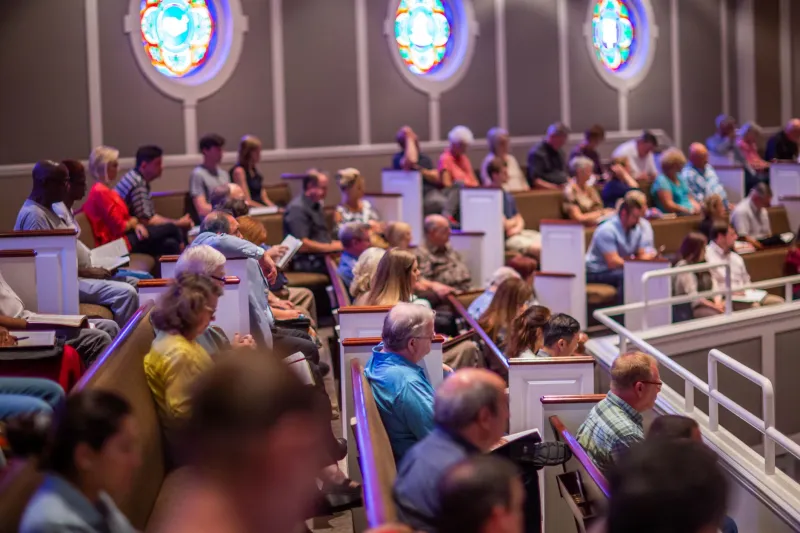
For generations, the Sunday morning offering represented far more than a practical necessity. It was an act of covenant—a tangible expression of communal commitment to a shared mission. Yet in urban congregations across the United States, that covenant is fraying. Pews that once held multigenerational families now sit partially empty. Pledge cards carry smaller figures. And the operational costs of maintaining a physical presence in a rapidly gentrifying neighborhood climb with each fiscal year. The arithmetic is unforgiving, and no amount of stewardship sermonizing will change it.
This is not a crisis of faith. It is a crisis of structure—and the two are not as separate as church administrators might prefer to believe.
The Anatomy of a Funding Shortfall
The financial pressures confronting urban churches today are the product of at least three converging forces. First, younger adults—millennials and Generation Z—are attending religious services at historically low rates. According to Pew Research Center data, the share of Americans who identify as Christian has declined by roughly twelve percentage points over the past decade, with urban centers leading that demographic shift. Those who do maintain a faith commitment frequently move between congregations or participate in diffuse, decentralized spiritual communities that do not generate consistent financial support for a single institution.
Second, the donor base that sustained many urban congregations through the latter half of the twentieth century is aging. Long-tenured members who gave faithfully for decades are retiring, relocating to be near adult children, or passing away—taking with them not only their tithes but institutional memory and social capital that cannot easily be replaced.
Third, and perhaps most acutely, the neighborhoods in which these churches are embedded are being transformed by forces entirely indifferent to their survival. Rising property taxes, escalating utility costs, and the broader economic pressure of gentrification have turned the simple act of keeping the lights on into a monthly act of institutional will. A congregation that once owned its building outright may now face a property tax assessment that would have been unimaginable twenty years ago, or a capital repair bill on aging infrastructure that dwarfs the annual operating budget.
Taken together, these forces demand a response that goes well beyond the traditional stewardship campaign.
Rethinking Revenue as a Theological Question
There is a temptation, particularly among congregations with a strong social justice identity, to treat financial sustainability as a distraction from mission—a concession to institutional self-preservation rather than an expression of prophetic witness. This framing is not only practically dangerous; it is theologically thin.
The church does not exist to perpetuate itself. But it does exist to serve its community, and a congregation that closes its doors serves no one. Financial survival, understood in this light, is not a retreat from justice ministry. It is a precondition for it. The congregation that cannot meet its mortgage cannot run its food pantry, staff its immigrant legal services clinic, or open its fellowship hall to the neighborhood recovery group that has nowhere else to gather.
Recognizing this, a growing number of urban church leaders are approaching financial restructuring not as a budget problem but as a justice issue—one that demands the same creativity, moral seriousness, and community accountability that they would bring to any other dimension of their advocacy work.
Social Enterprise as Sacred Vocation
One of the more promising models emerging in urban congregational life involves the development of social enterprise ventures that generate revenue while simultaneously advancing the congregation's mission. These are not mere commercial tenants occupying unused square footage; they are mission-aligned businesses and organizations whose operations embody the values the congregation professes.
Consider the congregation in Chicago's South Side that converted its underutilized education wing into a licensed commercial kitchen, leased to Black-owned catering businesses and food entrepreneurs during the week. The kitchen generates rental income, reduces the financial pressure on the congregation's general fund, and directly supports economic development in a community the church has served for decades. The revenue and the mission are not in tension—they are the same thing, expressed in different registers.
Similar models are emerging in cities from Baltimore to Oakland: congregations partnering with worker-owned cooperatives, hosting community health clinics in exchange for operational support, or launching nonprofit subsidiaries that can access grant funding unavailable to religious institutions operating under their primary tax status.
Community Land Trusts and the Long Game
For congregations that own real property—often their most significant and most vulnerable asset—community land trusts offer a mechanism for preserving both the physical and mission integrity of their holdings against the pressures of speculative real estate markets. By transferring property into a community land trust structure, a congregation can ensure that its building remains permanently affordable and mission-aligned, even in the event that the congregation itself undergoes significant change.
This approach requires a degree of institutional humility that does not come easily to organizations that have spent decades defining themselves by their physical address. It means acknowledging that the building may ultimately serve the neighborhood more faithfully under a different governance structure than under the exclusive control of a shrinking membership. It means, in effect, treating the congregation's property as a community asset rather than an institutional possession—a theological move with profound practical consequences.
Several urban congregations affiliated with mainline Protestant denominations have begun exploring land trust partnerships in cities including Philadelphia, Detroit, and Seattle, often in collaboration with community development organizations and municipal housing agencies. The results are still unfolding, but the theological logic is sound: the church that holds its assets loosely is more likely to remain a genuine servant of its neighborhood than the church that clings to ownership at the cost of mission.
Shared Ministry Spaces and the Ecumenical Opportunity
Another model gaining traction involves the deliberate co-location of multiple congregations or faith-based organizations within a single facility. Rather than each congregation bearing the full cost of maintaining its own building, shared ministry spaces allow several communities to divide operational expenses while pooling their collective presence and programming capacity.
This arrangement demands a degree of ecumenical generosity and administrative coordination that can be genuinely difficult. Questions of scheduling, shared governance, and theological compatibility require sustained negotiation. But congregations that have navigated these challenges successfully often report that the arrangement has deepened their sense of shared mission and expanded their collective capacity to serve the surrounding neighborhood in ways that none of them could have managed independently.
The Congregation That Counts the Cost
Jesus warned his disciples against beginning construction without first counting the cost. The urban congregations most likely to survive the financial pressures of this moment are those willing to undertake that reckoning honestly—without sentimentality about the models that once worked, and without despair about the challenges that lie ahead.
Financial reimagination is not a betrayal of the gospel. It is, in the most literal sense, faithful stewardship: the responsible management of the resources, relationships, and responsibilities entrusted to the community of faith for the sake of a neighborhood that needs it to remain standing. The collection plate will always have its place. But the church that stakes its future on the plate alone is not exercising faith. It is exercising denial.
The time for a more courageous accounting is now.