From Establishment to the Margins: How Mainline Protestantism Surrendered the City and What Faithful Coalitions Are Doing to Win It Back
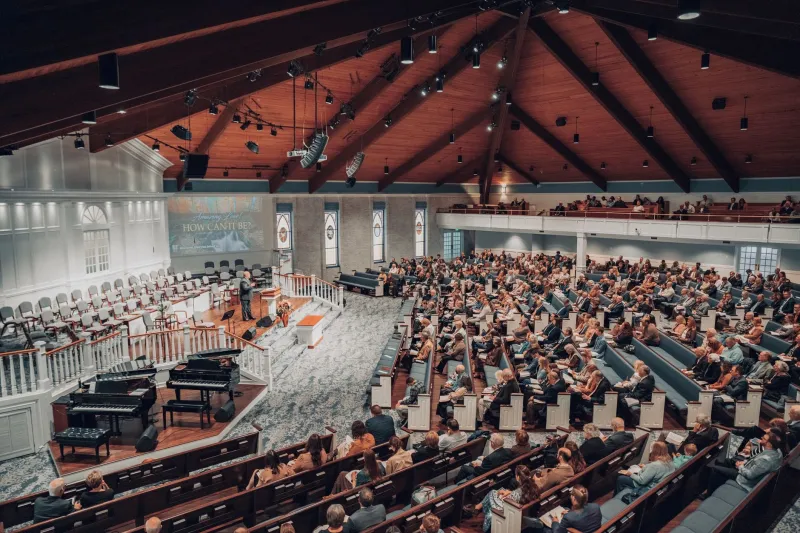
There was a time — not so distant that it escapes living memory — when a phone call from the right Episcopal bishop or Presbyterian executive could alter the outcome of a city council vote. When the civic calendar of an American metropolis moved, in no small part, according to rhythms set by denominational assemblies. When the word of a mainline pastor carried institutional weight that politicians could neither ignore nor afford to antagonize.
That time is over. Understanding precisely why it ended, and what its ending cost the communities these churches claimed to serve, is not merely an exercise in ecclesiastical nostalgia. It is, for urban faith leaders today, an urgent act of strategic discernment.
The Architecture of Influence — and Its Slow Collapse
At its postwar peak, mainline Protestantism — encompassing Methodist, Presbyterian, Episcopal, Lutheran, and Congregationalist traditions, among others — possessed a remarkable convergence of assets: real estate holdings in city centers, membership rolls that overlapped substantially with civic leadership, denominational bureaucracies capable of coordinating advocacy across multiple jurisdictions, and a theological vocabulary that American political culture had largely absorbed as its own moral lingua franca.
The erosion of this influence did not arrive suddenly. It accumulated across decades, driven by forces both internal and external. The white flight of the 1960s and 1970s hollowed out urban congregations as members followed highways to the suburbs, taking their giving and their political connections with them. Denominations that had once spoken with a unified voice fractured over questions of race, gender, and sexuality — consuming enormous institutional energy in internal conflict precisely when external engagement demanded clarity and momentum.
Perhaps most consequentially, mainline churches struggled to translate their prophetic instincts into durable political relationships. They could issue statements; they could not always organize precincts. They could convene forums; they could not always deliver votes. Over time, elected officials learned to accept the moral endorsement of established congregations while discounting their practical capacity to move constituents. The relationship curdled from partnership into performance.
The Credibility Problem No One Wanted to Name
Beneath the structural explanations lies a harder truth that progressive faith communities have been slow to reckon with fully: the mainline's loss of influence in cities was also, in part, a loss of credibility among the very populations those cities increasingly represented.
As American urban demographics shifted — as Black, Latino, Asian, and immigrant communities became the demographic reality of city life — predominantly white denominational leadership found itself speaking on behalf of communities whose trust it had not earned and whose experiences it did not share. The advocacy was frequently genuine. The posture was frequently paternalistic. Communities that had survived without these institutions' intercession were understandably skeptical of their sudden eagerness to serve as intermediaries.
This is not a comfortable history to rehearse. It is, however, an indispensable one. Faith communities that skip this reckoning in their rush toward renewed relevance are likely to reproduce the very dynamics that eroded their standing in the first place.
What the New Coalitions Are Doing Differently
Across American cities — from Detroit to Houston, from Philadelphia to Los Angeles — a different model of faith-based civic engagement is taking shape. It does not look like the mainline establishment it is, in some respects, attempting to succeed. Its organizational logic is worth examining carefully.
Rooting authority in relationship, not institution. The faith coalitions gaining genuine traction in city politics today tend to derive their credibility not from denominational affiliation or property portfolios, but from sustained presence in specific neighborhoods. Pastors who have walked with their congregations through foreclosure crises, school closings, and environmental hazards carry a different kind of standing than those who arrive at city hall from a distance. Political actors have learned to distinguish between the two.
Building multiracial, multi-tradition tables deliberately. Organizations such as PICO National Network (now Faith in Action) and the Industrial Areas Foundation have demonstrated that faith coalitions capable of bridging Black, Latino, white, and immigrant congregations — across Baptist, Catholic, Pentecostal, and progressive Protestant lines — command a breadth of constituency that no single tradition can replicate. This is not merely strategic diversity. It reflects a theological conviction that the Body of Christ, fragmented by race and class, cannot speak prophetically about a city it has not learned to inhabit together.
Investing in leadership development as a long-term discipline. The most effective urban faith coalitions today treat the formation of politically capable pastoral leaders as a years-long process, not a weekend training. They are teaching clergy to read municipal budgets, to understand zoning law, to negotiate with housing authorities — not because faith should be reduced to policy mechanics, but because prophetic credibility in the twenty-first century city requires the ability to engage on the city's own terms.
Choosing campaigns that connect moral vision to material stakes. Where the old mainline often led with abstract principle, the emerging coalitions are disciplined about anchoring their advocacy in concrete, winnable campaigns: affordable housing preservation, wage theft enforcement, immigrant driver's license access, participatory budgeting. These campaigns build organizational muscle, demonstrate deliverable results, and give congregations something tangible to celebrate — a political education that no amount of position-paper writing can replicate.
The Theological Stakes of the Question
It would be a mistake to frame this entire analysis in purely strategic terms, as though the goal were simply to restore religious institutions to a seat of influence they once occupied and squandered. The Metropolitan Christian Council holds a different view.
The question of how faith communities engage urban political life is, at its root, a theological question about what the church is for. A Christianity that seeks power for its own perpetuation has already lost something essential. A Christianity that withdraws from the structures shaping the material conditions of its neighbors has abandoned the incarnational logic of its own tradition.
What the best urban faith coalitions are reaching toward is something more demanding than either of those options: a posture of engaged accountability, in which congregations accept both the risks of political involvement and the discipline of genuine accountability to the communities they serve. Not chaplains to power. Not captives of any partisan coalition. But persistent, principled, organized voices — rooted enough in neighborhood life to be trusted, skilled enough in civic process to be effective.
A Long Rebuilding
The influence that mainline Protestantism accumulated over a century did not dissipate in a single decade, and it will not be restored — nor should it be simply restored — in one either. What is being built in its place is something structurally different: more genuinely multiracial, more organizationally sophisticated, more honest about the distance between moral aspiration and political power.
The closing of the mainline era was, in retrospect, as much an opportunity as a loss. The question now is whether the faith communities inheriting that space will be wise enough to learn from what failed, humble enough to share authority across traditions, and patient enough to build the kind of relational power that actually lasts.
The city is watching. So, one suspects, is something larger.