When the Steeple Moves to the Suburbs: The Megachurch Exodus and the Crisis It Leaves Behind
A Quiet Exodus with Loud Consequences
The maps do not lie. Plot the location of megachurch satellite campuses established in the last two decades against the addresses of their founding urban congregations, and a pattern emerges with uncomfortable clarity: the money, the membership, and the momentum are moving outward. Not always dramatically. Not always intentionally. But steadily, and with consequences that urban ministry leaders are only beginning to fully reckon with.
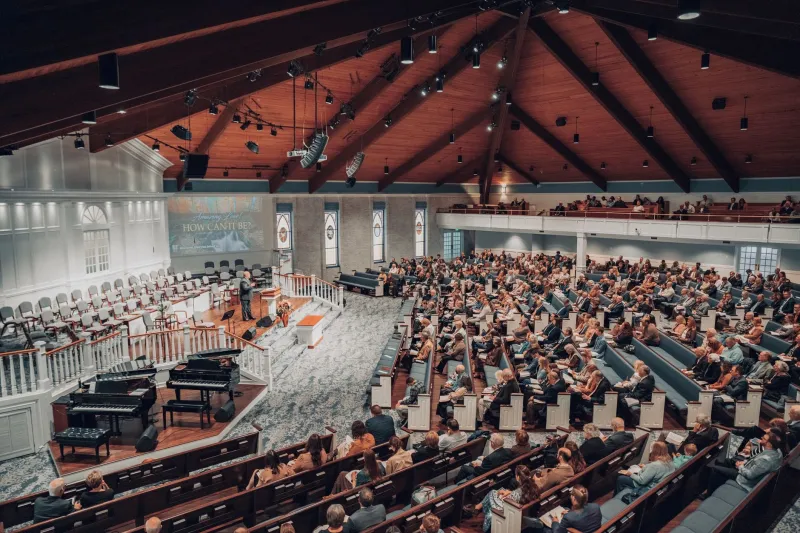
This is not a story about bad actors or cynical decisions. Most of the pastors overseeing this geographical redistribution believe, sincerely, that they are extending the church's reach. Multi-site models are presented as multiplication strategies—more people hearing the gospel, more communities served, more square footage consecrated to worship. The suburban campus is framed as addition, not subtraction.
But for the neighborhoods left behind, the arithmetic tells a different story.
What Leaves When a Congregation Thins
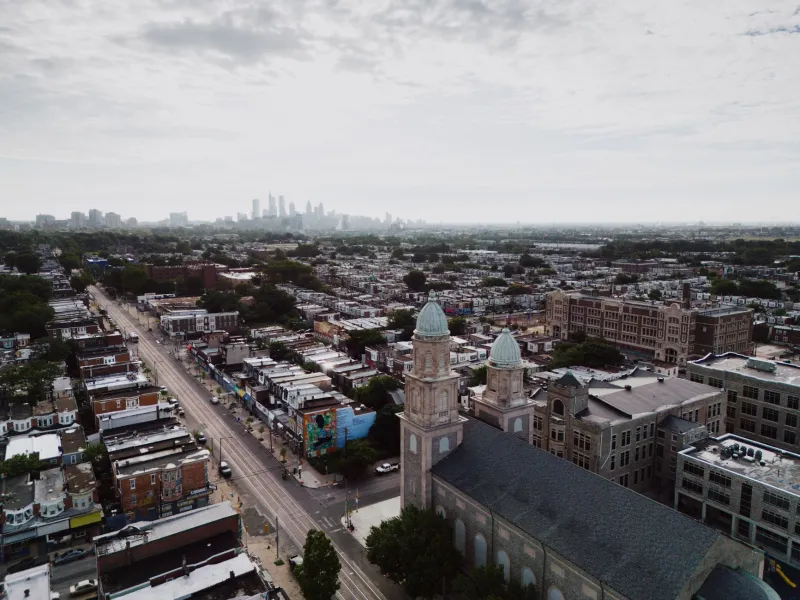
Urban congregations have historically functioned as far more than worship venues. They have served as anchor institutions—stable, trusted, deeply embedded presences that hold neighborhoods together across cycles of disinvestment and development pressure. A church with three hundred active members in a gentrifying zip code is not simply a spiritual community. It is a landlord, an employer, a meeting space, a political constituency, a network of mutual aid, and a repository of institutional memory stretching back generations.
When that congregation loses a third of its membership to a gleaming suburban campus forty minutes away, it does not simply lose tithes and attendance. It loses capacity. The food pantry operates with fewer volunteers. The advocacy committee struggles to field a delegation for the city council hearing. The pastor, now stretched between pastoral care and institutional survival, has less bandwidth for the coalition work that once made the congregation a force in neighborhood politics.
This is the structural reality that megachurch growth models rarely account for in their expansion calculus: the urban congregation is not a franchise location that can be replicated elsewhere without loss. It is an ecosystem, and ecosystems do not survive transplantation intact.
The Theology of Convenience
There is a theological critique embedded in this phenomenon that progressive faith leaders have been reluctant to name directly, perhaps out of ecumenical courtesy, perhaps out of a disinclination to appear provincial. But the reluctance has a cost.
The suburban campus model, at its core, is organized around the preferences and comfort of its members. Parking is abundant. Neighborhoods are safe by the narrow definitions that anxious middle-class families apply to that word. The children's programming is excellent, the coffee is good, and the commute—while longer—is navigated in the privacy of a personal vehicle rather than on a bus route that passes through the parts of the city that make people uncomfortable.
This is not worship shaped by encounter with the neighbor. It is worship shaped by the avoidance of the neighbor. And a Christianity organized around avoidance cannot simultaneously claim to be organized around justice.
The Incarnation, after all, was not a commuter arrangement. The Word did not become flesh in a comfortable location and then drive into difficult neighborhoods when the ministry schedule required it. The theological tradition that progressive urban Christians draw upon is one of presence, of dwelling, of being rooted in place precisely because place is where justice is either practiced or abandoned.
What Urban Congregations Are Losing—and to Whom
The membership drain flowing toward suburban campuses is not demographically neutral. Congregations that once held together working-class longtime residents and upwardly mobile younger members are watching the latter group depart first. What remains, too often, is a congregation that is older, less financially resourced, and more dependent on an institutional infrastructure that was designed for a larger, wealthier membership.
This dynamic has particular resonance in communities of color, where the megachurch model has made deep inroads. Black and Latino megachurches with suburban campuses face a version of this tension that is freighted with additional complexity: the aspiration toward suburban prosperity is itself a form of hard-won mobility, and critiquing it risks appearing to demand that communities of color remain in underfunded urban neighborhoods for the sake of someone else's justice agenda.
These are not simple conversations, and they deserve to be held with care. But they must be held. The question of who benefits from the geographical redistribution of Black and Latino church resources—and who is left with diminished institutional support in neighborhoods facing displacement, disinvestment, and policing crises—is a justice question, not merely a strategic one.
Reclaiming the Prophetic Capacity of the City Church
For urban congregations watching their institutional weight diminish, the path forward is neither nostalgia nor resignation. It is a deliberate, theologically grounded recommitment to the specific work that only a rooted urban presence can perform.
This means, in practical terms, several things. It means treating the congregation's physical presence in its neighborhood as a form of advocacy in itself—resisting the temptation to sell or lease property to developers, even when the financial pressure is severe. It means building coalitions with other urban congregations, including those of different denominations and theological orientations, to aggregate the political capacity that no single thinned-out congregation can muster alone. And it means naming, from the pulpit and in the parish hall, the theological stakes of geographical rootedness.
It also means asking hard questions of partner denominations and networks that funnel resources toward suburban expansion while urban congregations struggle. Denominational bodies have leverage that individual congregations lack. They can establish equity frameworks that redirect a portion of suburban campus revenue back toward urban ministry infrastructure. They can resist approving satellite campuses that will demonstrably cannibalize urban membership. They can fund urban ministry positions with the same generosity they extend to church-planting in growing exurban markets.
The City as Theological Commitment
There is a reason that the prophetic tradition in Scripture is overwhelmingly urban in its orientation. The city is where power concentrates, where inequality is most visible, where the neighbor is impossible to avoid, and where the gap between proclaimed values and practiced ones is most ruthlessly exposed. The prophets did not speak from the countryside. They stood at the city gate.
Urban congregations that are hemorrhaging members to suburban campuses are not simply facing a demographic challenge. They are facing a question about whether the church retains the will to stand at the gate—to be present where presence is costly, to advocate where advocacy is needed, to root itself in neighborhoods that the market has decided are expendable.
The megachurch migration is, at bottom, a test of theological conviction. And the cities are watching to see how their churches answer.