From the Congregation to the Council Chamber: Five Concrete Ways Urban Churches Can Shape Policy Without Crossing the Line
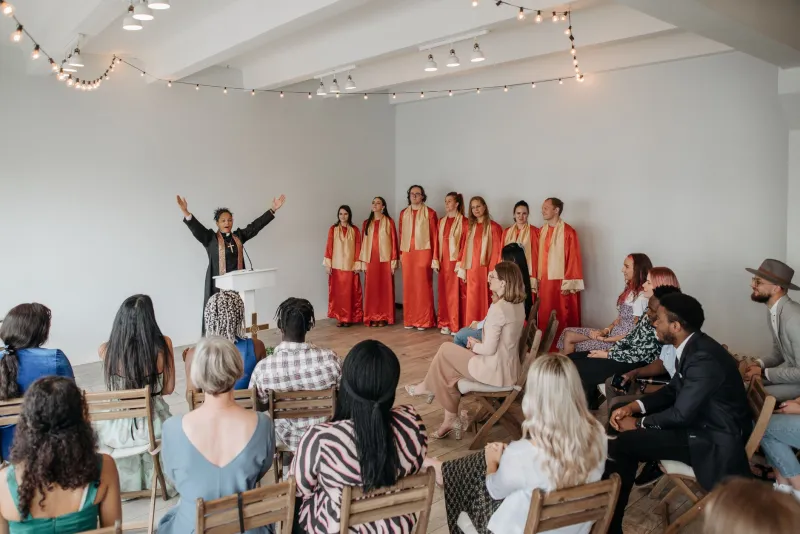
The tension is familiar to nearly every urban pastor who has stood at a pulpit in the past decade. On one side sits the prophetic imperative — the ancient, uncompromising call to speak on behalf of the vulnerable, to name injustice, and to hold the powerful accountable. On the other side sits the practical reality of a congregation composed of people with genuine disagreements about politics, candidates, and parties, not to mention the ever-present concern about running afoul of IRS regulations governing tax-exempt organizations.
Many pastors respond to this tension by retreating from civic engagement entirely, a choice that feels safe but is itself a theological decision — and not a neutral one. Silence in the face of injustice is not apolitical. It is a posture, and the prophets of Israel understood it as such.
The good news is that this is not a binary choice between partisan cheerleading and civic withdrawal. There exists a wide and largely unexplored territory between endorsing a candidate from the pulpit and saying nothing at all. What follows are five concrete strategies that urban congregations can pursue to build genuine political influence, hold elected officials accountable, and shape the policy environment of their cities — all while maintaining congregational unity and their legal standing as 501(c)(3) organizations.
1. Build a Robust Voter Education and Civic Participation Ministry
The single most foundational act of political engagement available to a congregation is also among the most legally uncomplicated: ensuring that every eligible member is registered to vote, understands what is on the ballot, and has a concrete plan to participate in every election cycle — not just presidential years.
This is not about telling people how to vote. It is about removing the barriers that keep millions of eligible Americans, disproportionately concentrated in urban communities of color, from exercising the franchise at all. Voter registration drives, candidate forums that invite representatives from multiple parties and viewpoints, nonpartisan voter guides that lay out positions on issues of concern to the community, and organized transportation to polling locations on Election Day are all well within the legal boundaries of what a church can do.
The political impact of this work should not be underestimated. A congregation of three hundred adults that reliably turns out ninety percent of its members for every city council election is a force that local elected officials notice and respond to. That kind of consistent civic participation is political power, and it costs nothing but organization and commitment.
2. Become an Expert on the Issues That Directly Affect Your Community
Elected officials at every level — from city council members to state legislators to members of Congress — are frequently making decisions on issues they understand only superficially. Zoning regulations, school funding formulas, public transit investment, affordable housing policy, criminal justice reform: these are areas where a congregation that has done its homework can become an indispensable resource and a credible voice.
Consider establishing a policy committee within your congregation — composed of members who bring professional expertise in law, public health, education, finance, or urban planning — charged with tracking legislation and regulatory decisions that affect the community the church serves. When a city council votes on a rezoning proposal that threatens affordable housing, your congregation should be able to show up at the public hearing with specific, informed testimony. Not partisan testimony. Expert testimony, grounded in both data and the lived experience of the people your church serves.
This kind of issue-based engagement is not only legally sound — it is, in many respects, more politically effective than candidate endorsements. It builds relationships with officials across party lines and establishes your congregation as a serious civic actor rather than a voting bloc to be courted and forgotten.
3. Join or Build Issue-Based Coalitions That Cross Denominational Lines
No single congregation, however large or well-organized, wields the political influence of a broad coalition. Urban churches of different denominations, theological traditions, and demographic compositions frequently share deep commitments on specific policy questions — affordable housing, living wage legislation, immigrant rights, criminal justice reform — even when they disagree on many other matters.
Organizations such as Faith in Action (formerly PICO National Network), the Industrial Areas Foundation, and Gamaliel have spent decades building exactly these kinds of interfaith and inter-congregational coalitions in cities across the country. These networks have won concrete policy victories: living wage ordinances in Baltimore, community benefits agreements in Los Angeles, police accountability reforms in Chicago. Their model is relational organizing — building power through sustained relationships between institutions rather than through individual charisma or electoral cycles.
For a congregation seeking to amplify its civic voice, joining an established community organizing network is often more effective than attempting to build political influence from scratch. It also provides a structural buffer that helps protect individual pastors from the accusation of partisan activity, since the coalition's agenda is set collectively and is explicitly issue-based rather than candidate-focused.
4. Host Ongoing Civic Dialogue That Models a Different Kind of Political Conversation
One of the most underutilized resources the church possesses in the current political moment is physical space and relational trust. In a culture where political discourse has become increasingly tribal and hostile, a congregation that creates genuine space for difficult conversations across lines of difference offers something genuinely rare.
This does not mean false equivalence or the pretense that all positions are equally valid. It means modeling the kind of rigorous, respectful, values-grounded civic discourse that democracy requires and that our current media environment almost never produces. Town halls on local issues, structured dialogues between community members and their elected representatives, educational forums on policy questions affecting the neighborhood — these are all activities that build civic capacity while reinforcing the congregation's role as a community anchor.
Over time, a church known for hosting serious civic conversations becomes a venue that elected officials want access to, which is itself a form of political leverage.
5. Develop a Prophetic Public Voice Through Official Statements and Direct Action
As an institution, your congregation has the right — and, we would argue, the responsibility — to issue public statements on matters of moral concern. A church can, without any legal jeopardy, declare that a proposed policy is inconsistent with the dignity of human beings, that a budget reflects values incompatible with the Gospel's concern for the poor, or that a pattern of policing violates the sanctity of human life.
These institutional statements carry weight precisely because they come from a community with a recognized moral standing in the city. They should be used carefully and with genuine discernment — not every political controversy rises to the level of prophetic witness — but they should not be withheld out of a vague fear of controversy.
Beyond statements, direct action — peaceful, organized public witness in the tradition of the civil rights movement — remains one of the most powerful tools available to faith communities. When congregants march together, show up at city hall, or conduct a prayer vigil outside a site of injustice, they are exercising a form of political power that no campaign contribution can replicate.
The Prophetic Tradition Is Not Optional
The strategies outlined here are practical, but they rest on a theological conviction: that the church is called to be present in public life as a witness to a different set of values than those that currently govern our cities. This is not about capturing political power for the church's own benefit. It is about using the church's unique position — its relationships, its moral authority, its institutional presence — in service of the communities it is called to serve.
The ballot box is one arena. But the council chamber, the zoning board, the school board meeting, the coalition table — these are also places where the church's voice belongs.