Beneficiaries and Bystanders No More: How Urban Congregations Must Confront Their Role in Neighborhood Displacement
There is a particular kind of silence that settles over a congregation when the sermon touches too close to home. A pastor preaches on economic justice, on the sin of exclusion, on the biblical mandate to protect the vulnerable — and the pews fill with nodding heads and murmured amens. What rarely follows is the harder question: What is our own institution's role in the very harm we are denouncing?
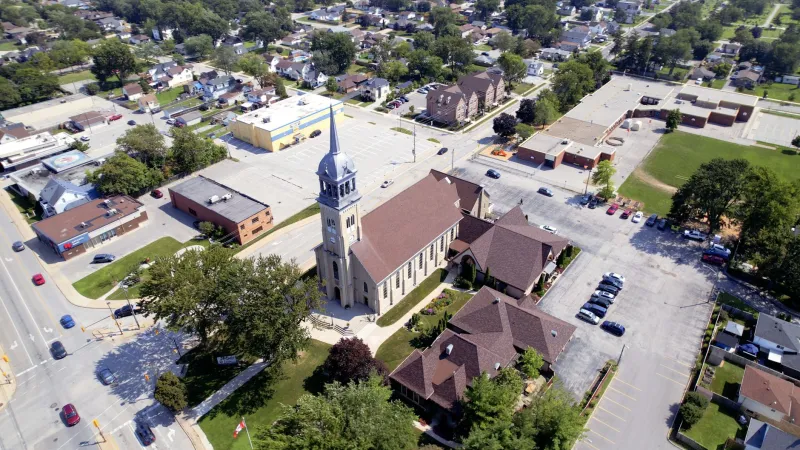
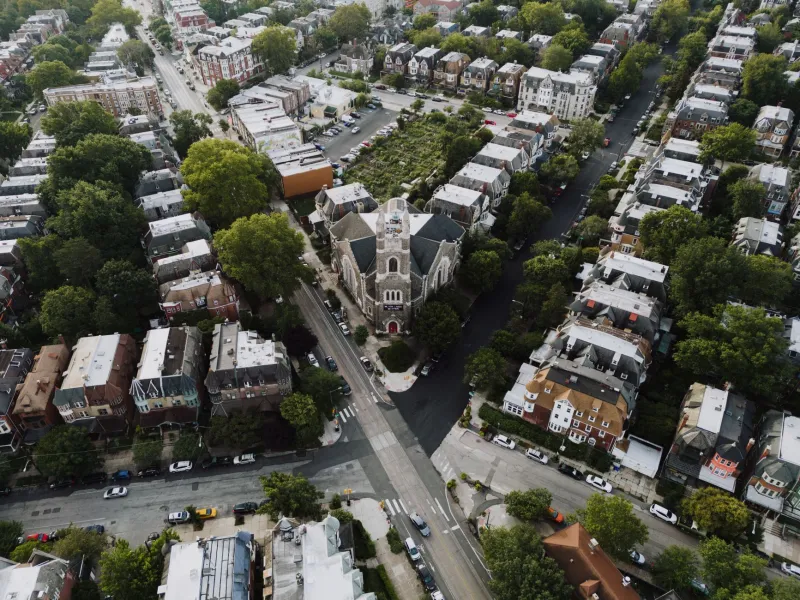
For many urban churches in the United States, that question has become impossible to avoid. As neighborhoods across cities like Atlanta, Denver, Philadelphia, and Chicago undergo rapid demographic and economic transformation, congregations that once served working-class and low-income communities have found themselves sitting atop appreciating real estate, drawing wealthier newcomers through their doors, and watching their longtime members quietly disappear to the outer suburbs. The theology of justice flows freely from the pulpit. The institutional accountability, far less so.
This is the gentrification problem that no stewardship sermon fully addresses.
The Uncomfortable Arithmetic of Urban Church Growth
It would be convenient to frame gentrification as something that happens to urban churches — an external force against which congregations must valiantly stand. The more honest accounting is considerably more complicated. In many cities, churches are not merely witnesses to neighborhood change; they are, in measurable ways, participants in it.
Consider the mechanics: a congregation renovates a long-neglected building in a transitional neighborhood. The renovation signals investment. Coffee shops and boutique fitness studios follow. Property values climb. The congregation, now the anchor institution of a newly desirable block, draws younger, more affluent attendees who appreciate its social justice messaging and its urban authenticity. The offering plate grows. The ministry expands. And the families who built that congregation over decades — the ones who could not afford to stay — attend less frequently, then not at all.
This is not a hypothetical. It is the lived experience of dozens of congregations from Brooklyn to Oakland. The church did not intend to displace anyone. It may have genuinely mourned the losses. But intention and impact are theologically distinct categories, and the Christian tradition has never permitted good intentions to substitute for honest accountability.
What Scripture Demands Beyond Lament
The prophetic tradition in Scripture is not primarily a tradition of grief. It is a tradition of indictment and transformation. When Amos condemned those who "trample on the poor and take from them levies of grain" (Amos 5:11), he was not inviting the powerful to feel sad about economic inequality. He was demanding structural change from those with the capacity to produce it.
Urban churches that benefit from rising property values and shifting neighborhood demographics possess something the displaced do not: institutional leverage. They hold deeds to land. They command the attention of city council members. They have access to legal resources, communications infrastructure, and organized constituencies. The prophetic call, faithfully applied, is not merely to lament displacement from a position of comfort — it is to deploy that leverage on behalf of those who have none.
This requires a prior step that many congregations resist: naming their own complicity plainly, from the pulpit and in the boardroom. A congregation that cannot say, We have benefited from forces that have harmed our neighbors, cannot credibly claim to speak prophetically about those same forces. Credibility in advocacy begins with honesty about one's own position.
Practical Models for Institutional Accountability
Several congregations across the country have begun developing frameworks that move beyond symbolic solidarity toward structural intervention. Their approaches offer instructive models.
Community Land Trust Partnerships. Some churches have transferred portions of their property holdings to community land trusts — nonprofit entities that hold land in perpetual trust for the benefit of low- and moderate-income residents. By removing land from the speculative market, these partnerships create permanently affordable housing that cannot be eroded by future appreciation cycles. A congregation in Washington, D.C., partnered with an established land trust to convert an underused parish hall and adjacent lot into twelve permanently affordable housing units. The church retained no financial benefit from the transfer. That, too, is a form of tithing.
Anti-Displacement Advocacy Coalitions. Several Chicago-area congregations have formalized their political presence through interfaith coalitions specifically organized around housing policy. Rather than issuing occasional statements of concern, these coalitions lobby directly for inclusionary zoning ordinances, just-cause eviction protections, and right-to-return policies for displaced residents. They bring their congregation members to public hearings, train them in testimony, and hold elected officials accountable through organized voter engagement. The distinction between charity and advocacy matters here: one addresses symptoms, the other addresses causes.
Transparent Institutional Audits. A small but growing number of congregations have commissioned what might be called a community impact audit — an honest assessment of how their institutional presence, property decisions, and demographic shifts have affected the surrounding neighborhood. The results are not always flattering. But publishing those findings, and committing publicly to corrective action, builds the kind of trust that no outreach program can manufacture.
Renter Protection Ministries. Some churches have embedded legal aid clinics within their existing social service ministries, providing tenant rights education and eviction defense to low-income residents in their neighborhoods — including, notably, residents who are not members of the congregation. This represents a meaningful commitment to the neighborhood as the primary constituency, not merely the congregation itself.
The Theological Stakes
At its core, this conversation is about the nature of Christian witness in a city defined by economic stratification. The temptation for thriving urban congregations is to inhabit a posture of benevolent concern — to speak the language of justice while protecting the institutional interests that make that language feel costless.
But the gospel, as the tradition has consistently affirmed, is not costless. It demands something. For wealthy individuals, Jesus spoke of the camel and the needle's eye. For institutions that have accumulated land, influence, and capital in neighborhoods where others have lost their footing, the demand is no less searching.
The question is not whether urban churches will be changed by the forces reshaping American cities. They already are. The question is whether they will allow that transformation to produce deeper faithfulness or merely more comfortable self-congratulation.
A Call to Honest Discipleship
The Metropolitan Christian Council does not suggest that urban congregations are uniquely culpable for the housing crisis or that their growth is inherently sinful. Institutional vitality, faithfully directed, can be a genuine instrument of justice. But vitality that is insulated from accountability — that celebrates its own expansion while the community around it contracts — is something the prophetic tradition has a name for.
Urban churches have an opportunity that is historically unusual: they hold real assets in neighborhoods where those assets matter enormously. They can use those assets to protect the vulnerable, to resist displacement, and to model a different relationship between institutional power and community need. Or they can continue nodding along to justice sermons while the arithmetic of their own flourishing tells a different story.
The congregation that is willing to ask the harder question — not just What can we do for our neighbors? but What have we already done to them, and what are we prepared to give back? — is the congregation that has understood something essential about what faithfulness in the city actually requires.